

Tratamientos
Dental implants
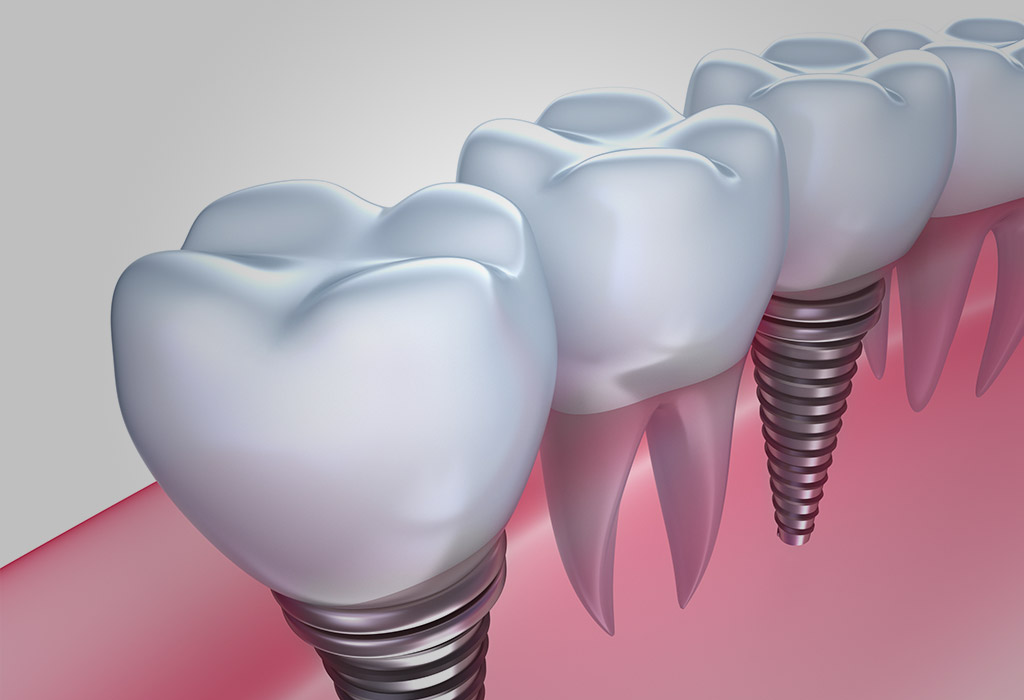
It is a medical device intended to be an artificial replacement for the root of a missing tooth. It has a threaded shape and is made of biocompatible materials that do not cause rejection and allow it to fuse with the bone.
Replacing lost teeth with implants preserves more bone because it is reabsorbed when it does not receive any type of stimulus, thus preventing jaw loss.
Components
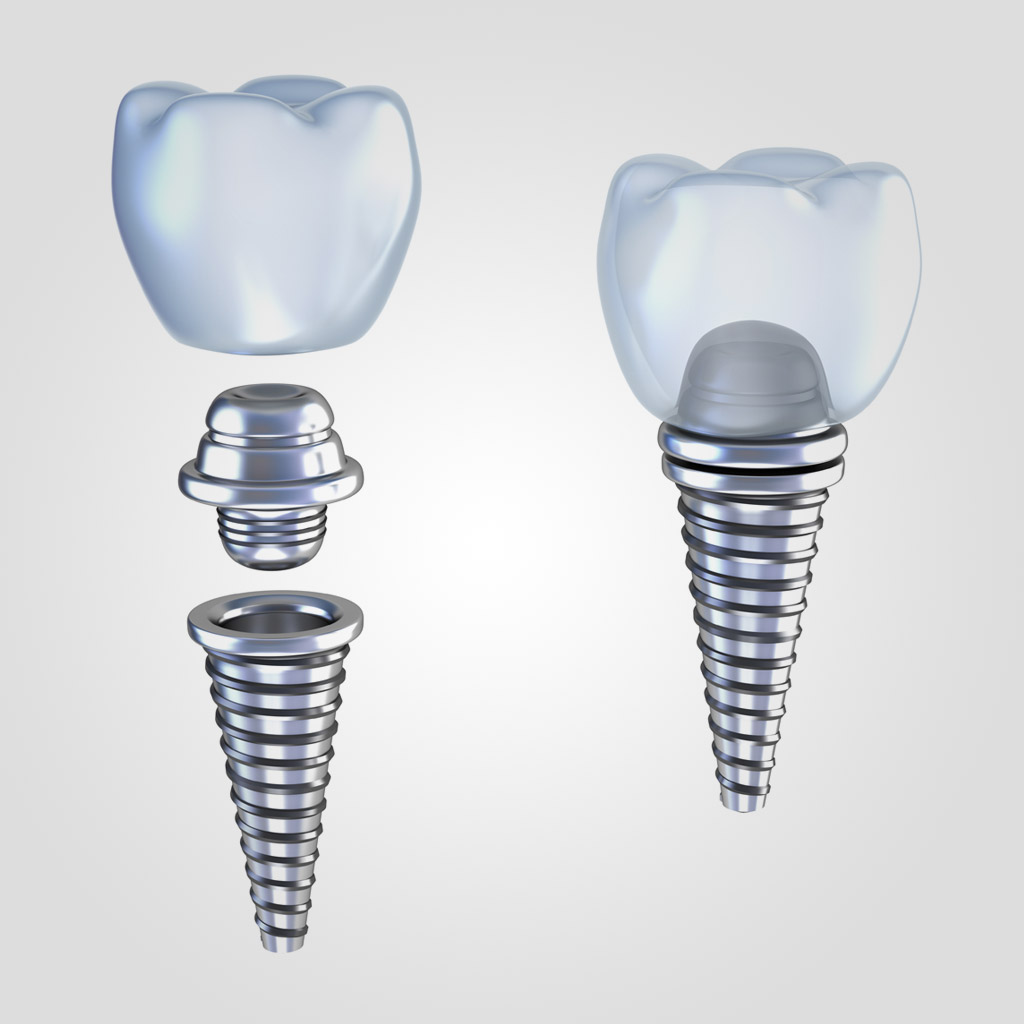
- Body. Portion of the dental implant that is designed to be inserted into the bone to anchor the prosthetic components, usually screw-like.
- Cover screw. After inserting the implant body into the bone during the first surgical stage, a cover is placed over the ridge module in order to prevent tissue growth inside the thread.
- Healing abutment. After osseointegration has occurred, a second surgical step is performed, the cover screw is unscrewed and removed and the healing abutment is screwed in.
- Pilar. It is the portion of the implant that holds the prosthesis.
Materials
Titanium
It is the most commonly used material for implants due to its high chemical stability and good biocompatibility properties. It withstands high occlusal loads and allows for implant osseointegration.
Ceramic materials
Existen implantes fabricados completamente con materiales cerámicos, implantes zirconio. Poseen gran potencial para ser usado en la odontología moderna.
Permiten una integración más rápida y fuerte que la producida con el titanio, ya que la unión no es mecánica, sino supuestamente química dando lugar a la biointegración.
It is a medical device intended to be an artificial replacement for the root of a missing tooth. It has a threaded shape and is made of biocompatible materials that do not cause rejection and allow it to fuse with the bone.
Replacing lost teeth with implants preserves more bone because it is reabsorbed when it does not receive any type of stimulus, thus preventing jaw loss.
Components
- Body. Portion of the dental implant that is designed to be inserted into the bone to anchor the prosthetic components, usually screw-like.
- Cover screw. After inserting the implant body into the bone during the first surgical stage, a cover is placed over the ridge module in order to prevent tissue growth inside the thread.
- Healing abutment. After osseointegration has occurred, a second surgical step is performed, the cover screw is unscrewed and removed and the healing abutment is screwed in.
- Pilar. It is the portion of the implant that holds the prosthesis.
Materials
Titanium
It is the most commonly used material for implants due to its high chemical stability and good biocompatibility properties. It withstands high occlusal loads and allows for implant osseointegration.
Ceramic materials
Existen implantes fabricados completamente con materiales cerámicos, implantes zirconio. Poseen gran potencial para ser usado en la odontología moderna.
Permiten una integración más rápida y fuerte que la producida con el titanio, ya que la unión no es mecánica, sino supuestamente química dando lugar a la biointegración.
Implants
Individual
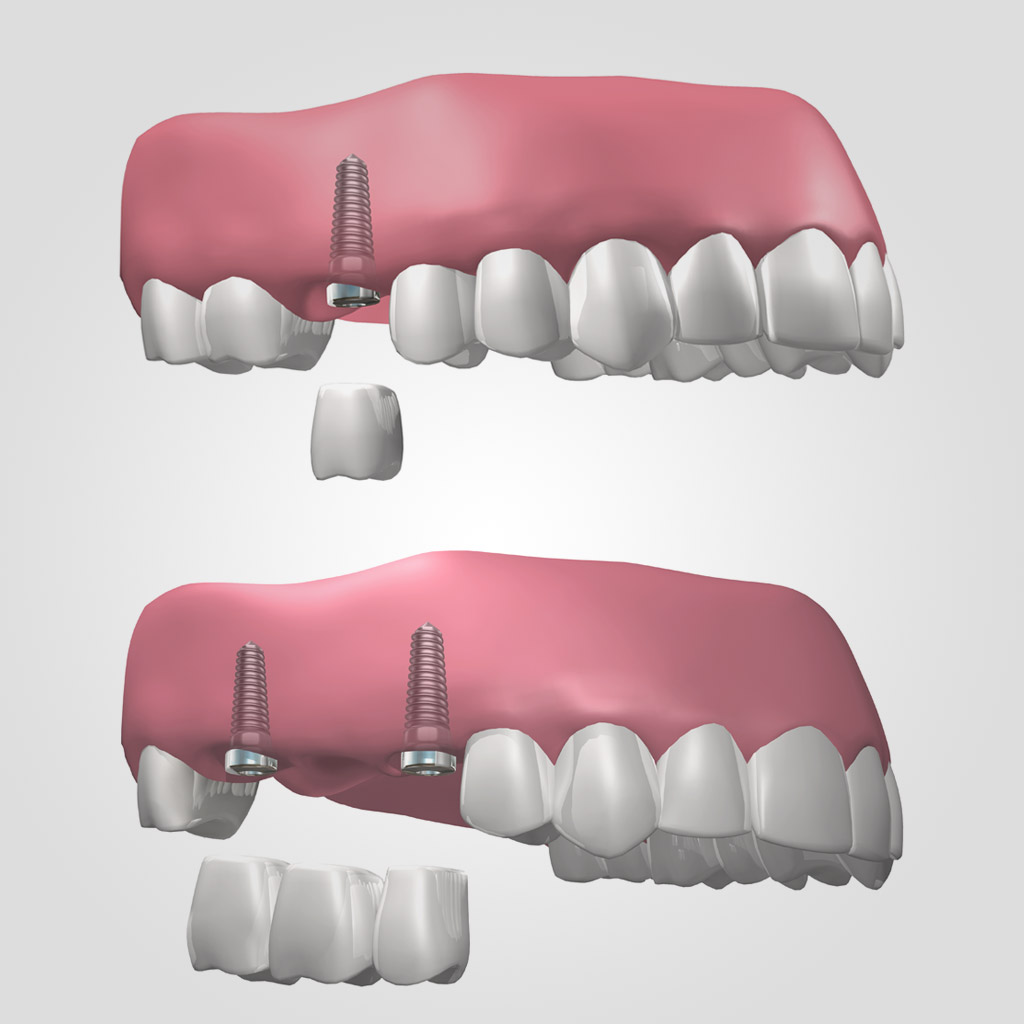
Fixed prosthesis with 6 implants
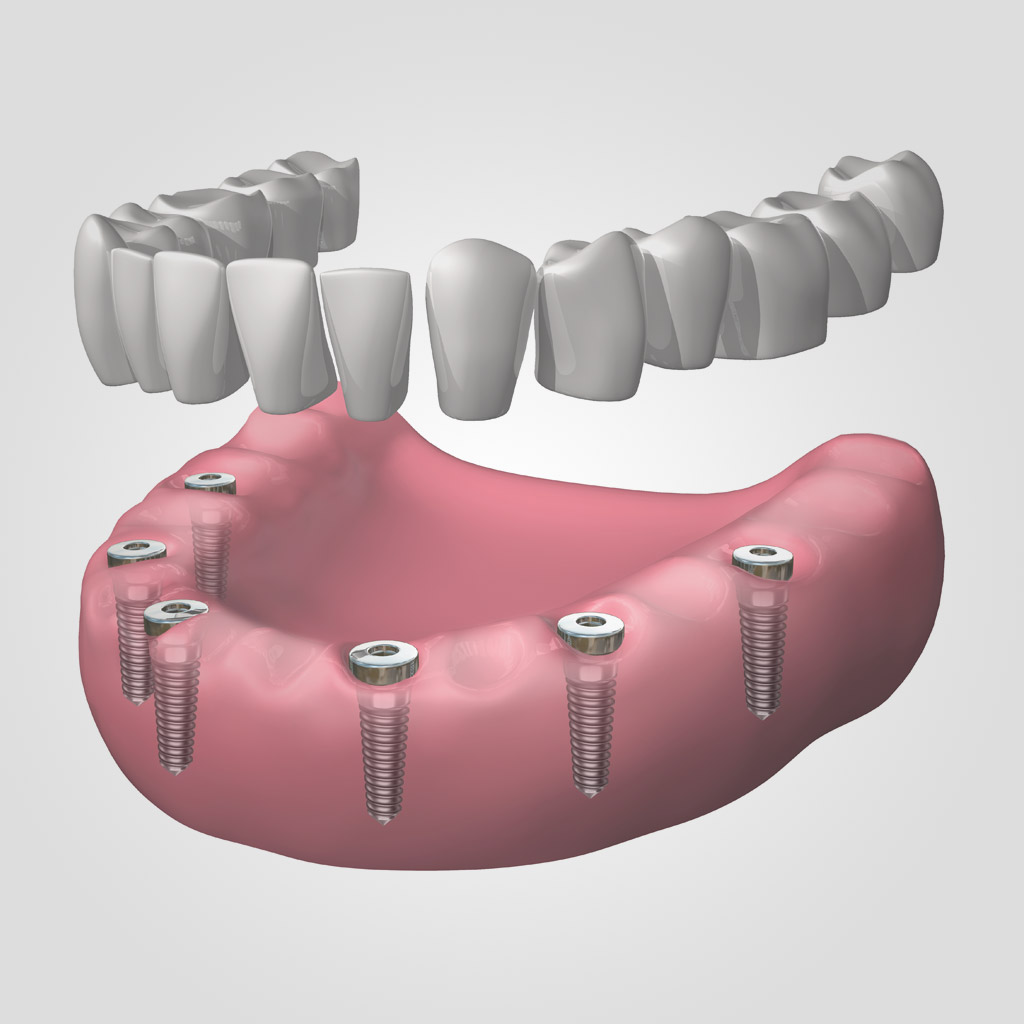
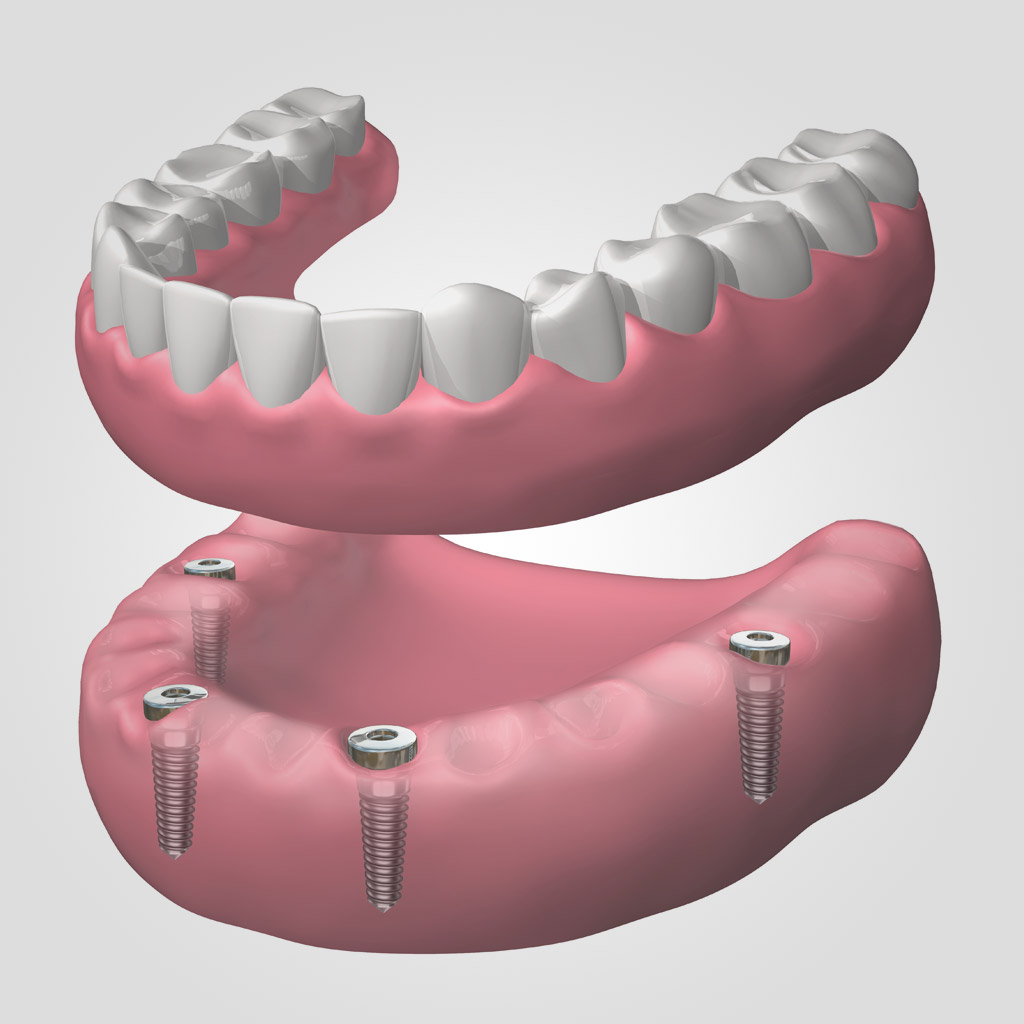
Removable prosthesis with 4 implants
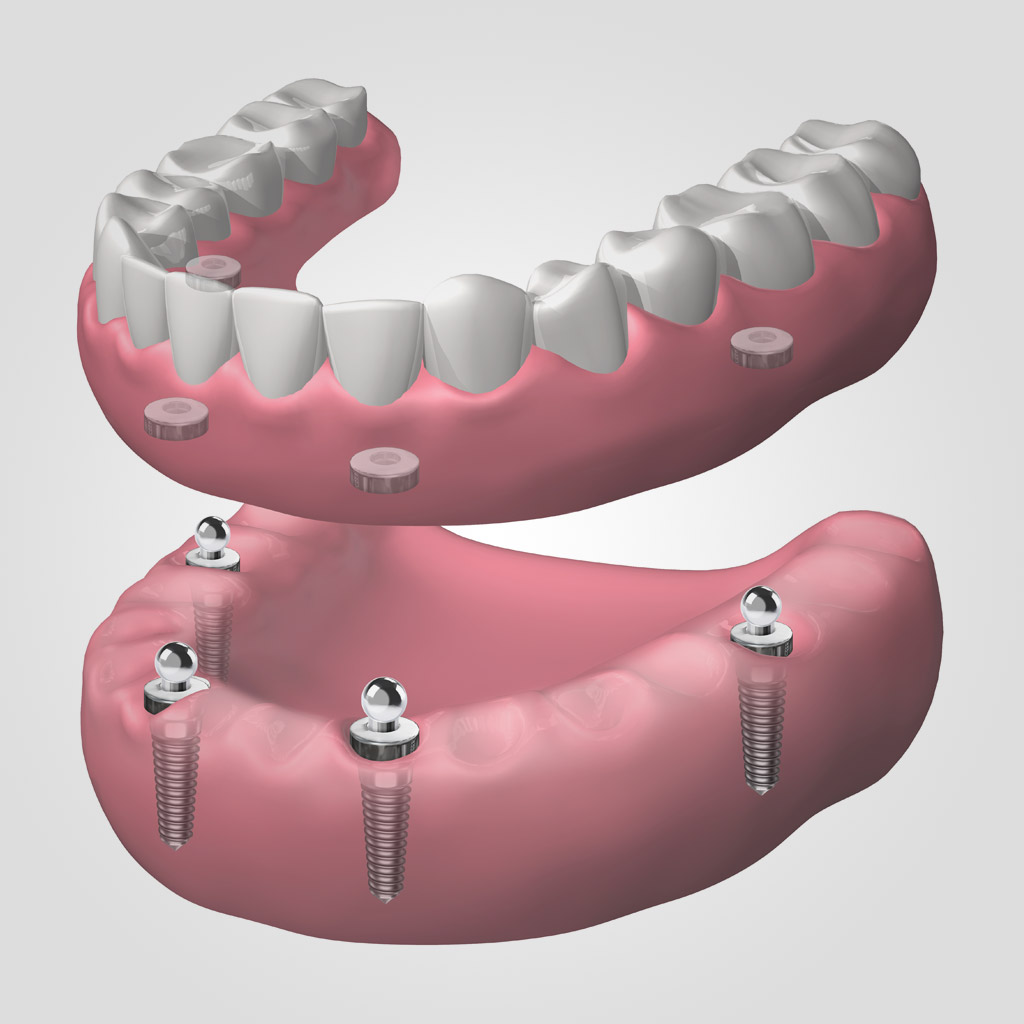
Hybrid prosthesis with 4 implants