


Frequently Asked Questions
Invisalign

Yes. In fact, it’s one of the most requested treatments by adults because it’s discreet and comfortable.
It may be noticeable a little in the first few days, but most patients adapt quickly.
It is recommended to remove the aligners to avoid staining and keep them transparent.
The treatment may be prolonged or not progress properly. Consistency is key.
Yes, if proper retention isn’t achieved. That’s why it’s essential to follow the final instructions.
Frequently Asked Questions
Dental implants
The osseointegration process is defined as the firm, direct, stable and lasting mechanical union produced between the living maxillary bone and the body of a titanium dental implant, which occurs without the interposition of connective tissue.
For osseointegration to occur, a correct surgical technique must be performed, and its success depends on the presence or absence of inflammatory processes, the design of the implant, and the time the implant remains free of loads, which should be around 4 to 6 months.
Currently, the most advanced techniques, such as immediate loading implants, allow for the provision of a prosthesis with fixed teeth on osseointegrated implants within a few days or even hours of their placement.
There are very few absolute contraindications, among which we can highlight serious diseases that affect bone metabolism, specific infections, malignant tumors affecting the bone, or high-dose radiotherapy.
It is important to note that dental implants do not cause rejection by the body. When rejection is commonly discussed, it usually refers to the failure of the dental implant to osseointegrate (a failure rate of 2% to 5% of implants placed is considered normal). When a dental implant fails to osseointegrate, another can be placed to replace it.
This is an outpatient procedure, meaning the patient is treated at our dental clinic.
The procedure is performed in most cases under local anesthesia. For longer procedures (full mouth rehabilitation, sinus lifts, bone regeneration), intravenous sedation administered by an anesthesiologist at the dental clinic may be used.
Contrary to what it may seem, in many cases the post-operative period involves less discomfort than other minor dental procedures. An implant can sometimes cause gum discomfort during the wound healing process, so analgesics or anti-inflammatories are prescribed depending on the type of procedure.
Maintaining good oral hygiene during this period is essential to prevent gum infections. Antibiotics are usually prescribed as a precaution. In some cases, swelling frequently appears during the first few days, which usually subsides spontaneously within 72 hours. It is not painful and allows for normal daily activities.
The prostheses can be placed after a three- to six-month waiting period once the surgery has been performed.
Implants can be placed in young people once development is complete, usually from the age of sixteen in women and eighteen in men. There is no age-related contraindication for adults.
There are basically two types of implant-supported prosthetic rehabilitation: fixed prostheses made of zirconia or porcelain-fused-to-metal, which offer the highest level of aesthetics, comfort, and function, and removable prostheses (which can be taken out and put back in), made of resin. Removable prostheses are a more economical option as they are a less sophisticated treatment (since there are no teeth) and require more maintenance. In the clinic, the dentist takes impressions and bite registrations, which are then sent to the laboratory. There, the dental technician pours the impressions into plaster and fabricates the structures of the fixed prosthesis using wax models. These wax-ups are then embedded in special high-temperature resistant investment materials, and the metal is cast using various alloys.
The final step could be mounting the ceramic onto the metal structures, depending on the type of fixed prosthesis to be made, since there is also the possibility of making the crowns and bridges in pure porcelain (without metal) or on a base of a white material called alumina or zirconium, in the latter case the innovative cadcam technology is used.
Properly placed implants guarantee aesthetic results that, in most cases, are far superior to the patient's original teeth.
The patient should understand that they will not only achieve a healthy mouth but also an aesthetically pleasing smile. These should be their expectations.
Well-placed implants of a size proportional to the load they have to bear (the larger the size, the greater the safety) are for life.
The fundamental conditions for ensuring success are:
1. Proper planning of the specific case
2. The surgeon's skill and experience (implant size and correct placement)
3. The fabrication of the prosthesis, taking into account the loads it must bear and ensuring a proper fit to avoid abnormal forces that could overstress the implants
Quizás el riesgo más significativo es la pérdida de sensibilidad en la zona del labio inferior cuando durante la intervención se toca o se secciona el nervio mentoniano, dicha pérdida de sensibilidad puede ser temporal o permanente.
For this reason, one must be especially careful when operating in that area because it is not good to touch the nerve with an implant that is too long, but neither is it good to have an implant that is too short and cannot withstand the load it will be subjected to.
On the other hand, it is essential that the implants are correctly placed from the beginning, since once they osseointegrate they become "fused" to the bone and if it were necessary to remove them we would lose a lot of maxillary bone, which would greatly complicate rehabilitation and of course the results would never be the same.
Today, we have advanced techniques for performing surgery in extreme cases. We can resort to maxillary sinus lifts and grafts, which can be autologous (from the patient's own body) or of other types, with a very high success rate.
Fortunately, it is extremely rare for a patient who wishes to be rehabilitated to be unable to do so. The field of bone regeneration is undoubtedly one of the most significant advances in implantology in recent years.
For patients with periodontitis, implants are "THE SOLUTION." Traditionally, these patients were inevitably destined to lose their teeth.
The only treatment we could offer them was meticulous hygiene and regular visits to the clinic for periodontal treatments. The end result was always the same: a complete removable denture.
Now, implants have revolutionized the way we treat these patients. It's crucial to understand that lengthy periodontal treatments are not only useless but harmful because while we strive to preserve the natural tooth, we can't prevent the disease from progressing and causing bone loss. We must stop this process before it's too late.
Bone is fundamental for a successful rehabilitation and an aesthetic outcome. In extreme cases, achieving an aesthetic result is very difficult.
This may be the only case in medicine where the artificial replacement functions better than the original organ.
An implant that works correctly in the mouth (because it is placed in the ideal position and supports an axial load proportional to its size) has a lifespan far exceeding that of a natural tooth.
When we talk about implants without surgery, we're referring to computer-guided, blind surgical procedures. All these systems use a pre-made template onto which the implants are fitted, allowing us to place them without having to open the gum or use sutures. Logically, the procedure is less invasive, but even a slight variation in the template's position in the mouth could cause problems.
It is only advisable to do so in very specific and favorable cases. Even then, the quality of the prosthesis that can be offered in these cases is greatly affected by the time factor. In these cases, we offer temporary resin teeth that will later be replaced by permanent, highly aesthetic ceramic prostheses. Ceramic treatments cannot be completed in a single day; it is only possible to create pre-designed, and therefore not personalized, resin prostheses.
Those we discussed in the previous question, in which the prosthesis is placed on the same day as the surgery.
Zirconium is an excellent material in dentistry, boasting maximum biocompatibility (the same as titanium) and allowing for prostheses with unsurpassed aesthetics. However, its use in dental surgery is recent and still very limited. It can be said that as an implant, that is, placed within the bone, it offers no added advantages over titanium. It is a choice made by the dentist.
Frequently Asked Questions
Orthodontics
To correct a mismatch between the upper and lower dental arches and/or an abnormal alignment of the teeth.
The most frequent cases requiring orthodontic treatment are:
– Crowded or overlapping teeth
– Overbites or underbites
– Open bites (back teeth close but front teeth do not)
– Too much or too little space between teeth
– Extra or missing teeth
This technique is increasingly used, given the current interest in promoting the health of our children.
It is being requested at increasingly younger ages.
The forces applied to move the teeth are very gentle, so after the first few days you won’t notice anything special.
Yes, absolutely.
Orthodontic braces will not interfere with your daily activities.
You should follow some recommendations when eating or brushing your teeth.
They will not change your speech, so you can maintain your professional activity and social relationships without any interference.
All treatments require proper maintenance. With the help of fixed or removable lingual retainers, the results obtained can be stable, making it a lifelong investment.
They can be caused by:
– Bad habits (thumb sucking, tongue thrusting, etc.).
– Mouth breathing (due to hypertrophy of adenoids -vegetations-, etc.).
– Ectopic tooth eruption (a tooth located in a different place than its natural one).
– Dental agenesis (is the lack of one or more teeth).
– Supernumerary tooth (more teeth than usual).
– Craniofacial skeletal dysplasias (these are congenital alterations of the bones of the face and head).
– Space problems (occurs when the jawbone is still juvenile and the teeth are permanent, which are larger and more numerous).
Orthodontics is used in children and adolescents because their skeletons are growing rapidly and their teeth are erupting, allowing treatment to address both structures.
Once growth is complete, only the teeth can be treated. Craniofacial growth is considered to end around age fifteen in girls and age nineteen in boys.
Although it can be used at any age, orthodontics is capable of correcting misaligned teeth to achieve a healthy mouth. A beautiful smile brightens the face and makes it more attractive.
Jawbone, although very hard, is also very flexible. The biological process involved in tooth movement is the same at any age, so teeth can be moved at 20 as well as at 60.
It’s not just about appearance; it’s also a matter of health. Misaligned teeth can contribute to other problems such as cavities, periodontal (gum) disease, or joint problems.
The spectacular aesthetic improvement of fixed orthodontic appliances (braces) allows adults of any age, dissatisfied with the appearance and/or function of their mouth (crowded teeth, spaces between teeth, protruding teeth, etc.), to no longer feel limited and to accept orthodontics as normal.
Ceramic braces, which resemble tooth enamel and have no visible metal, go almost unnoticed by other people and satisfy most adults.
It is difficult to establish at what age a child needs orthodontic treatment.
Considering that children between 7 and 12 years old are in the period of changing teeth (exfoliating the primary or baby tooth for the arrival of the permanent or definitive one), a clinical and radiographic evaluation is recommended around the age of 7 to begin observing and controlling the correct dentofacial growth during this period.
Sometimes, when there are obvious problems, it may be advisable to visit children before the age of 7 in order to carry out early treatment.
Thus, in some patients we will intervene early – early treatment – often obtaining results unattainable with orthodontics alone once skeletal growth is complete, while in others, even if the problem is obvious, we will recommend waiting, periodically checking the children while the teeth erupt and the facial bones develop.
In adults, treatment can be started at any age.
It’s difficult to accurately assess future problems, but any existing issues will likely worsen over time, especially in a child or adolescent. We must remember that they are still developing, and dentofacial problems will also increase.
Treatment is advisable for two key reasons:
– If the anomaly is detected and treated early, it will be easier to manage, reducing discomfort, time, and cost.
– We could avoid more complex bone surgery (maxillofacial), preventing potential bone abnormalities that would affect the appearance of the face.
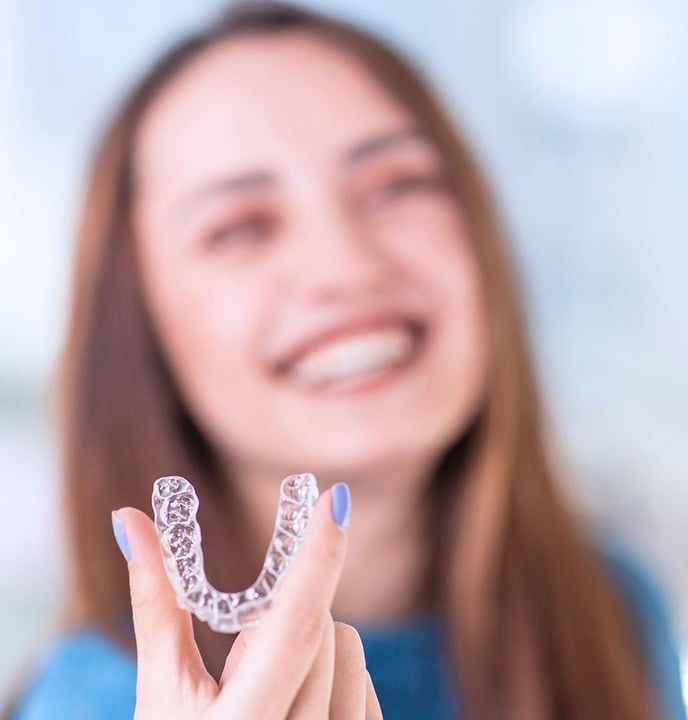
Frequently Asked Questions
Dental veneers
To correct a mismatch between the upper and lower dental arches and/or an abnormal alignment of the teeth.
The most frequent cases requiring orthodontic treatment are:
– Crowded or overlapping teeth
– Overbites or underbites
– Open bites (back teeth close but front teeth do not)
– Too much or too little space between teeth
– Extra or missing teeth
This technique is increasingly used, given the current interest in promoting the health of our children.
It is being requested at increasingly younger ages.
A smile is one of the most important aesthetic factors, inherent to a person. A beautiful and attractive smile projects a positive image and encourages the individual to smile with ease and naturalness.
A neat, healthy, and harmonious mouth gives one confidence in oneself.
Frequently Asked Questions
Zirconia crowns
Dental Aesthetics, as its name suggests, covers everything related to the beauty, aesthetics, or beautification of your teeth, in its many different forms and possibilities.
It is the branch of dentistry that will treat all those alterations and pathologies of the oral morphology in order to achieve an ideal canon of beauty.
Today, having a good smile is a clear example of health and social well-being.
Reasons why patients may seek these treatments:
1. Dental asymmetries (crowded or uneven teeth)
2. Interincisal diastemas (separation between anterior teeth)
3. Changes in color or pigmented or stained teeth
4. Cervical caries
5. Dental fractures
A smile is one of the most important aesthetic factors, inherent to a person. A beautiful and attractive smile projects a positive image and encourages the individual to smile with ease and naturalness.
A neat, healthy, and harmonious mouth gives one confidence in oneself.
Indications. Crowns are used when a large amount of tooth structure has been lost, for example, after extensive decay or trauma, as the retention of a veneer or filling would be very difficult due to the significant loss of tooth structure.
They are also used in cases of root canal-treated teeth to provide strength to the entire tooth and prevent possible fractures, since root canal-treated teeth weaken over time.
Contraindications. Virtually any patient can wear crowns, except for those who:
1. They have advanced gum disease.
2. The tooth has a problem that limits its preservation in the mouth.
3. They have excessive tooth mobility.
Dental crowns are made of such a durable material that they can sometimes last for more than 50 years. However, due to the natural wear and tear of chewing, they sometimes lose their shape or shine. In these cases, and if the patient wishes, the crown is removed and a new one is placed.
Frequently Asked Questions
Periodontics
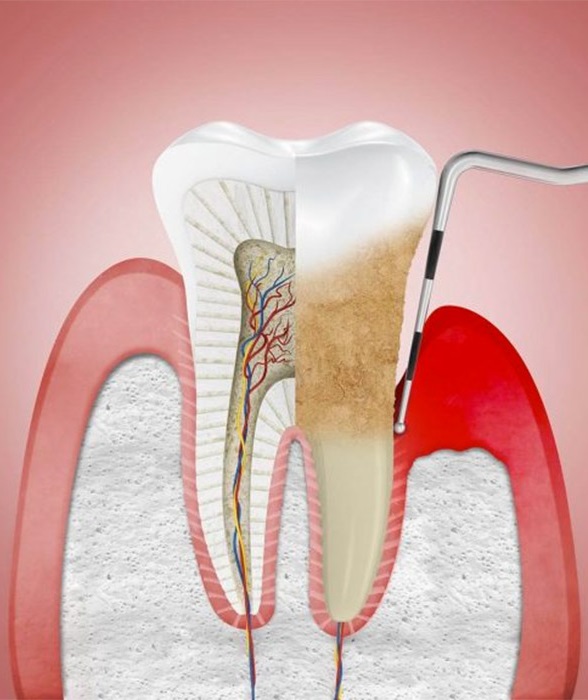
Periodontal diseases are a group of diseases that affect the tissues (periodontium) that surround and support the teeth in the jaws.
They are inflammatory diseases of infectious origin (caused by bacteria). Depending on their severity, they are called gingivitis when the inflammatory process only affects the superficial periodontium (the gums) and the tissues that support the tooth are not affected.
When the inflammatory process affects the deep periodontal tissues, it causes destruction of the bone and periodontal ligament, which are the tissues that support and hold the teeth in place. This stage is called periodontitis.
There are several stages of periodontitis, from the initial to the most advanced. If periodontitis is left untreated, it progresses, destroying all the supporting structures of the tooth, leading to its loss. For this reason, it is important to detect periodontitis and treat it in its earliest stages.
Gingivitis, in addition to causing gum inflammation and bleeding, especially when brushing, can progress to periodontitis in some individuals. Periodontitis, by destroying the bone that supports the teeth in the jaw, causes teeth to loosen and separate.
Over time, the teeth will eventually be lost, either due to the need for extraction because of their instability or because they fall out naturally.
This is due to bacteria that we all have in our mouths, around our teeth. If these bacteria are not properly removed, they gain access to the space between the tooth and the gum and can colonize this space, multiplying and causing the inflammatory and destructive reaction that defines these diseases.
The bacteria themselves are not capable of causing the consequences of these diseases; they require a susceptible individual (genetic predisposition) and a suitable environment (factors such as tobacco and stress are very important risk factors in the colonization of these bacteria).
Gingivitis is one of the most common diseases in humans, very common at all ages (in young people 75% of those aged 20 to 25).
Some cases of gingivitis, even without treatment, do not progress to the destruction of the periodontal tissues that support the teeth (periodontitis).
Periodontitis is very rare in young people and adolescents (approximately 1 case per 10,000). However, its frequency increases with age. It affects approximately 80% of the adult population over 35 years of age.
Therefore, it is a relatively common disease in adults, and its frequency clearly increases with age.
In its initial stages, it can be corrected. However, it tends to be a chronic condition. This means that when the disease is advanced and significant bone loss has occurred, the most that can be done is to halt its progression to prevent it from worsening.
The patient must be aware of their problem and understand that, after the initial treatment, they must visit the dentist at least once a year for maintenance cleanings for the rest of their life. Oral hygiene is fundamental to treating this type of problem. Only in this way can effective therapy be achieved.
The basic treatment consists of a thorough cleaning of the gums using an ultrasonic scaler, curettes (scraping instruments), and polishers. All of this is aimed at eliminating all the bacterial plaque causing the problem. The patient is able to clean the exposed portion of their teeth, but cannot access the part of the tooth below the gum line. This is the task the dentist will perform, so that after the cleaning, the inflammation decreases and the gum reattaches to the tooth, forming a barrier to prevent bacteria from entering.
The basic treatment is performed in stages. The mouth is divided into four quadrants, each of which is treated in several sessions. Each cleaning session is performed under local anesthesia, so it is painless. It lasts approximately 45-60 minutes. After the session, once the anesthetic wears off, the patient reports very little discomfort, and within three or four days, the condition of the gums improves remarkably. From this point on, it will be the patient’s responsibility to maintain the health of their gums and attend regular checkups every four to six months.
Regenerative treatment is used in severe cases, when the condition is very pronounced and has persisted for a long time, and the patient has experienced considerable bone loss. In these cases, before any restorative treatment, it is necessary to replace, as far as possible, the lost structures. This is achieved using various biomaterials: membranes, amelogenin, bone, etc.
All of these are combined effectively to restore the lost anatomy.
Fighting dental plaque and preventing tooth and gum disease.
1. Flossing: Use dental floss to remove germs and food particles between your teeth. Rinse.
How to hold the floss:
To remove plaque between your upper teeth, use the floss by moving it up and down.
To remove plaque between your lower teeth, use the floss by moving it up and down.
*Note! Gently insert the floss between your teeth. Do not force it, as this could injure your gums.
2. Toothbrush: Use whatever brushing method is most comfortable for you, but don’t scrub vigorously back and forth. Small circular motions and short back-and-forth strokes are best. Rinse.
To prevent cavities, what you put on your toothbrush is important.
Use a fluoride toothpaste.
Fluoride protects teeth against cavities.
Frequently Asked Questions
Pediatric Dentistry
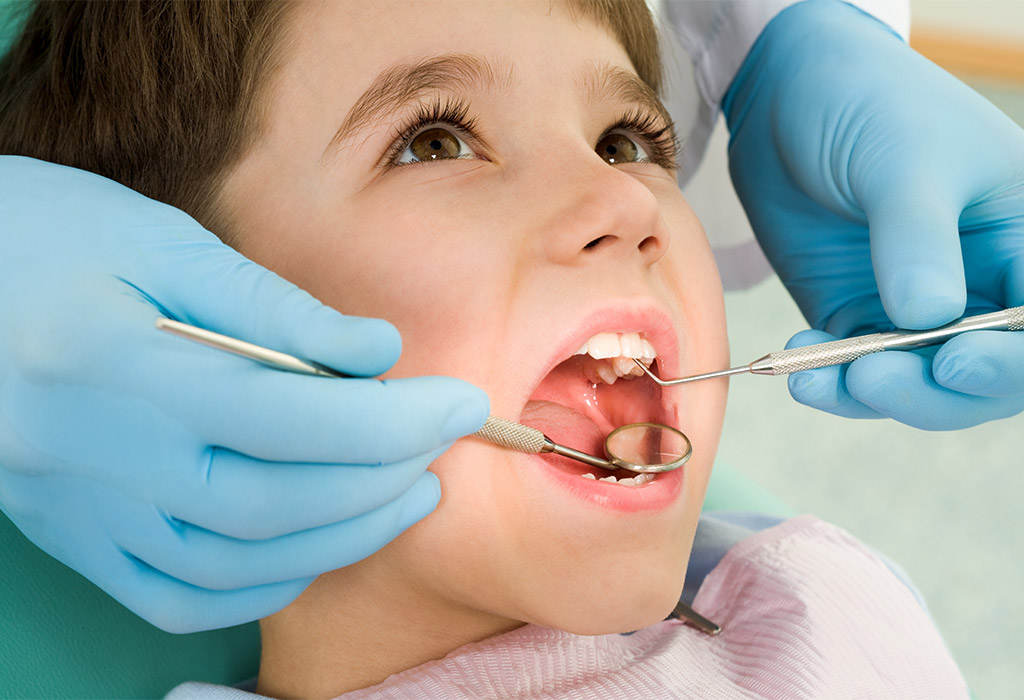
The main difference between general dentistry and pediatric dentistry in the treatment of cavities is the presence of primary or baby teeth in children, which causes the treatment to change. Lesions occurring in the primary dentition will be treated in a less conservative and more aggressive way than those occurring in permanent teeth, to avoid, in the worst case, insufficient treatment of a primary tooth that would then affect its successor, the permanent tooth.
Dental sealants to prevent cavities: These are resins applied to the chewing surfaces of the teeth. They reduce the likelihood of developing cavities on the teeth where they are placed. They act as protective barriers, preventing food debris from becoming trapped in the ridges of the teeth.
They make the chewing surfaces of the teeth smooth and easy to clean. They are usually applied to children between 6 and 7 years old, when their permanent teeth begin to erupt.
Although sealants make cleaning easier, brushing should not be neglected. If proper hygiene is not maintained, cavities can develop near the sealant. Applying sealants does not damage the enamel and does not require anesthesia. The dentist brushes the tooth and applies a cream, which hardens under a special light. Sealants last a long time, but regular checkups with the dentist are necessary to monitor their condition. Cavity bases and liners: For the base or bottom of the cavity, calcium hydroxide, zinc oxide eugenol (an antibacterial substance that forms secondary dentin), glass ionomer (which releases fluoride), and, previously, polycarboxylate cement and zinc phosphate (which are no longer used because they are very toxic) are used.
Temporary materials: These are materials used for a limited time until permanent material is available.
Definitive materials: These are the materials we will use in the final fillings.
Silver amalgam: The only one we can use in unsuitable conditions such as a difficult tooth or difficulty in isolating it.
Fluoride: It takes care of our enamel.