


Tratamientos
Pediatric Dentistry
Prevention
We have professionals who specialize in treating young children.
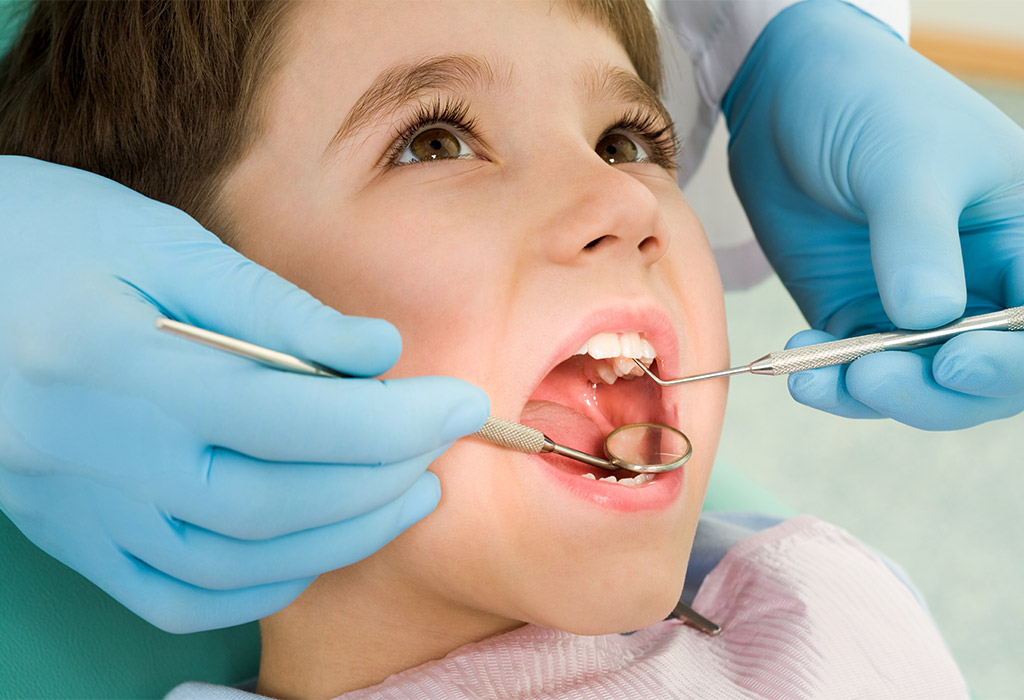
It is the branch of dentistry that focuses on treating children. The pediatric dentist is responsible for detecting possible abnormalities in the position of the jaws or teeth and providing restorative treatment when necessary. Special consideration is given to the unique needs of primary teeth and growing bones.
Restorative treatment primarily involves treating trauma, using sealants—which involve lightly filling the grooves and fissures of the teeth without removing much tooth structure to prevent potential cavities—and treating existing cavities and their consequences.

It is the most common condition in children aged 7 to 11. In primary teeth, trauma usually results in a dislocation, while in permanent teeth it usually results in a fracture; among permanent teeth, the most commonly affected are the upper central permanent incisors.
In cases where trauma results in avulsion—the complete detachment of the tooth from its socket—reimplantation is indicated if less than 120 minutes have elapsed; if more time has passed, the failure rate is 100%. The tooth must be transported in the patient’s own mouth or in the mouth of a family member, in milk or saline solution. Rubbing or brushing the tooth at any time is strictly contraindicated, as this would preclude the possibility of reimplantation.
Baby teeth
The following treatments are available:
Indirect coating. Before performing this procedure, you must ensure that the tooth in question does not exhibit spontaneous or nocturnal pain, that the history of pain has lasted no longer than two weeks, and that the pain is provoked and ceases when the painful stimulus is removed.
Direct coating. Direct restorations are generally not used on primary teeth because of the risk of failure. The pulp of primary teeth is no longer capable of repairing a pulp exposure because the pulp tissue...
Pulpotomy. It involves the complete removal of the coronal pulp, followed by the application of a filling material to the pulp chamber. This material will serve to:
– Promote healing and thereby preserve the vitality of the root pulp.
– Secure the surrounding tissues.
Pulpectomy. It involves the complete removal of the pulp from the coronal chamber as well as the root canal, followed by filling the canals with zinc oxide-eugenol. It is important that the filling material—in this case, zinc oxide-eugenol—be resorbable so that there are no problems when the permanent tooth begins to erupt.
Immature permanent teeth
Treatments for immature permanent teeth will be very conservative, unlike those for primary teeth, since these are the permanent teeth; and because they are immature, they regenerate very easily and are highly vital.
Pulpotomy
It is indicated in cases where, given the presence of exposed vital pulp, direct pulp protection or direct covering is contraindicated; and is therefore indicated for medium or large pulp exposures and in cases where there are symptoms of irreversible pulp damage, provided that the lesion has not reached the root pulp.
Fixed supports
Indications:
1. In cases of loss of a single molar
2. When a crown is also indicated for the tooth that will serve as the abutment
3. In uncooperative patients, since these patients will remove their removable retainers and will not use them
4. Imminent eruption of several teeth
5. Allergy to resins
Removable retainers
Indications:
1. Cooperative patients
2. Cases in which it is necessary to restore masticatory function
3. Cases in which aesthetic function is required, for example, in cases of missing anterior teeth
4. Cases with a high risk of caries